Overview
An autonomous property manager designed for zero mental load.
The problem
Both sides of the market are worn out by the lead-generation model.
Product thesis
From browsing a catalog to delegating to a property manager.
The experience
Ten moments, designed for delegation rather than management.
Brand identity and first impression
Setting the emotional tone through restraint.
The user need
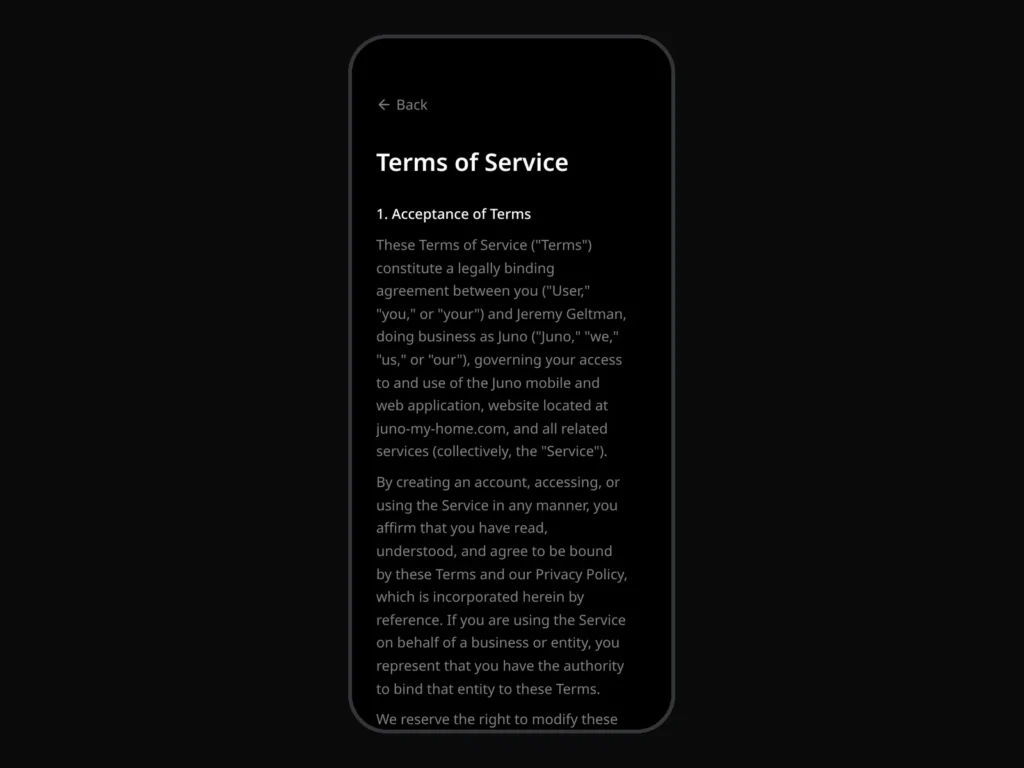
People arriving at Juno are often already stressed by something broken at home. Flashing badges, promo banners and long signup wizards make that worse.
The solution
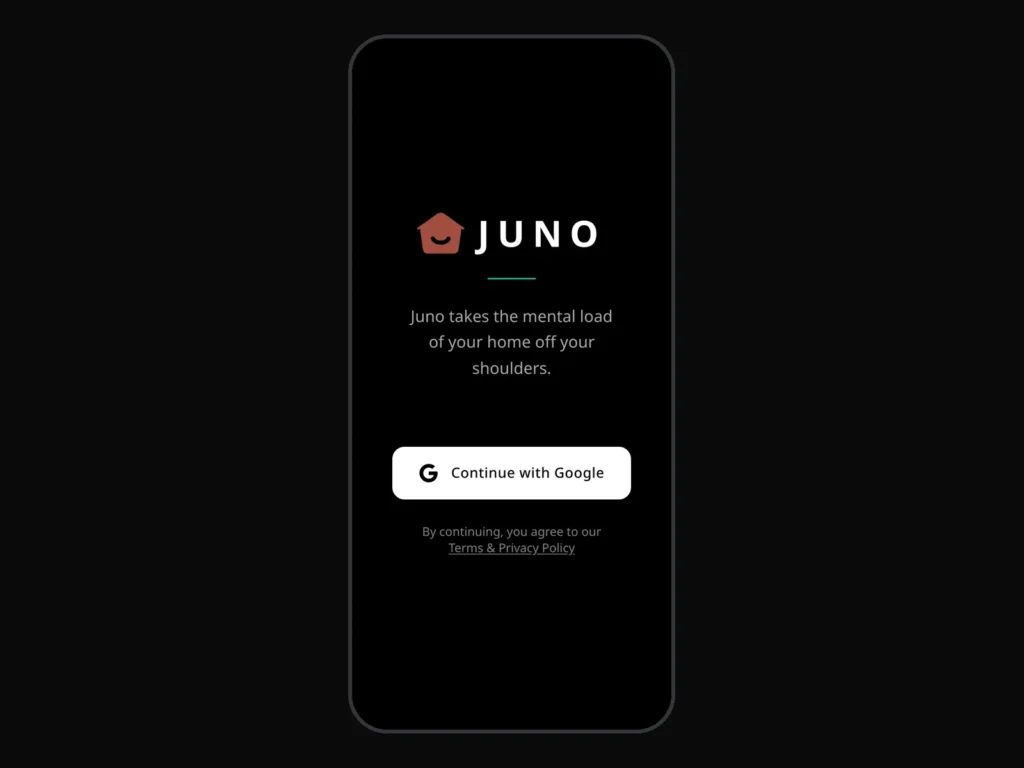
- A distraction-free splash screen: a warm house icon, high-contrast Jaldi type and one action, Continue with Google.
- Pure black with muted off-white copy establishes an uncluttered, high-craft identity.
- Google SSO captures a verified identity in one tap, skipping multi-field onboarding.
Conversational intake
Expressing a complex scope in under five seconds.
The user need
Users know what’s broken, but rarely know the trade category or the technical term (“compressor burnout” vs. “AC blowing warm air”).
The solution
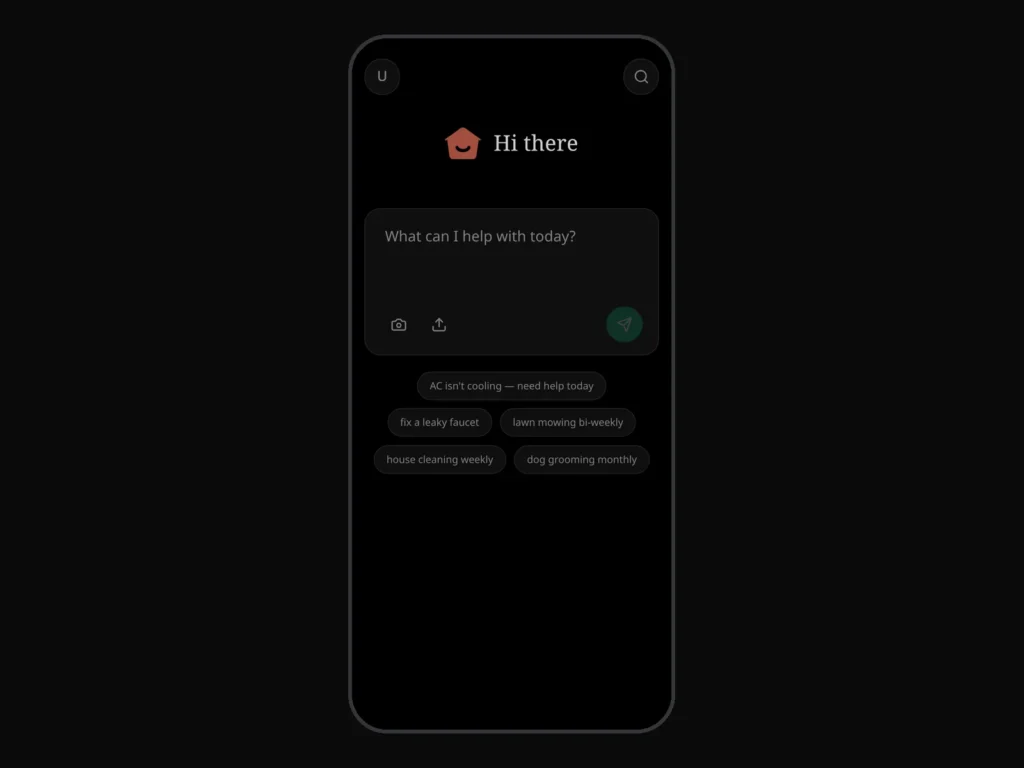
- A conversational input card sits in the natural thumb zone on mobile.
- Camera capture and document upload handle HOA notices, inspection reports and receipts.
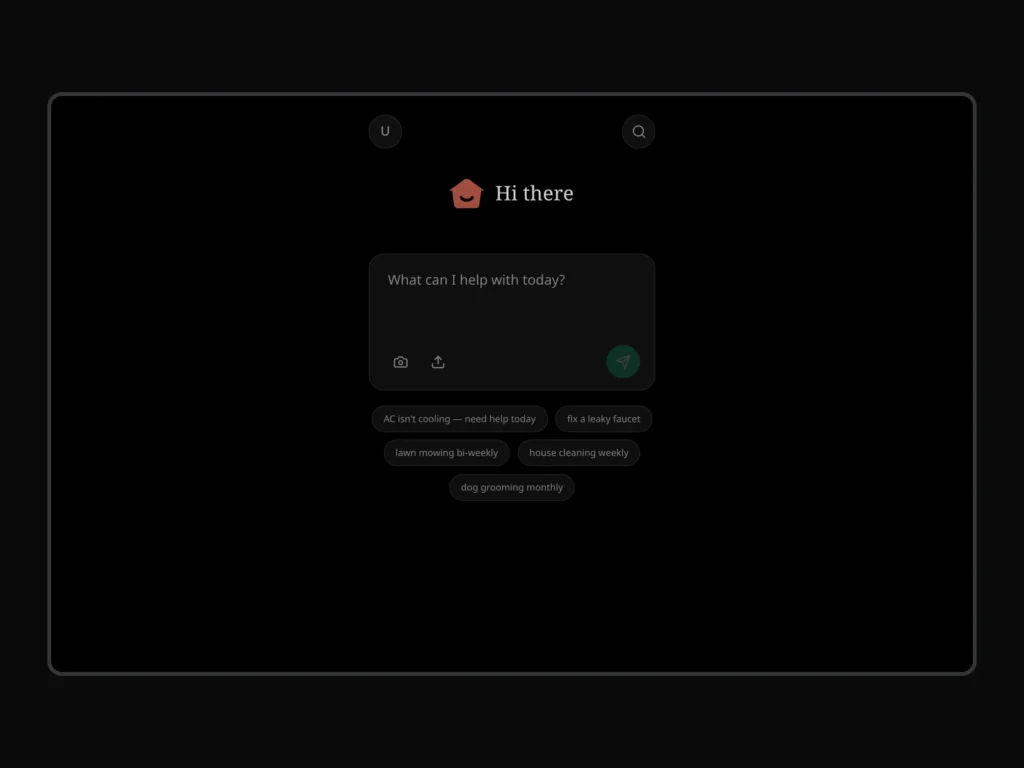
- Quick chips (“AC isn’t cooling”, “fix a leaky faucet”, “lawn mowing bi-weekly”) act as cognitive on-ramps.
- Submitting triggers background triage: trade categorization, labor estimates and outreach, with no dropdown menus.
The web app as a status hub
Same intake, same calm, on a bigger screen.
On desktop, Juno keeps the same single input and quick chips. The web app is where you check status, not where you have to manage the work: every action is also available over SMS and email.
Omnichannel onboarding
Meeting users where they already live: calendar and SMS.
The user need
Home tasks are periodic. Asking users to check an app inbox every day guarantees abandonment.
The solution
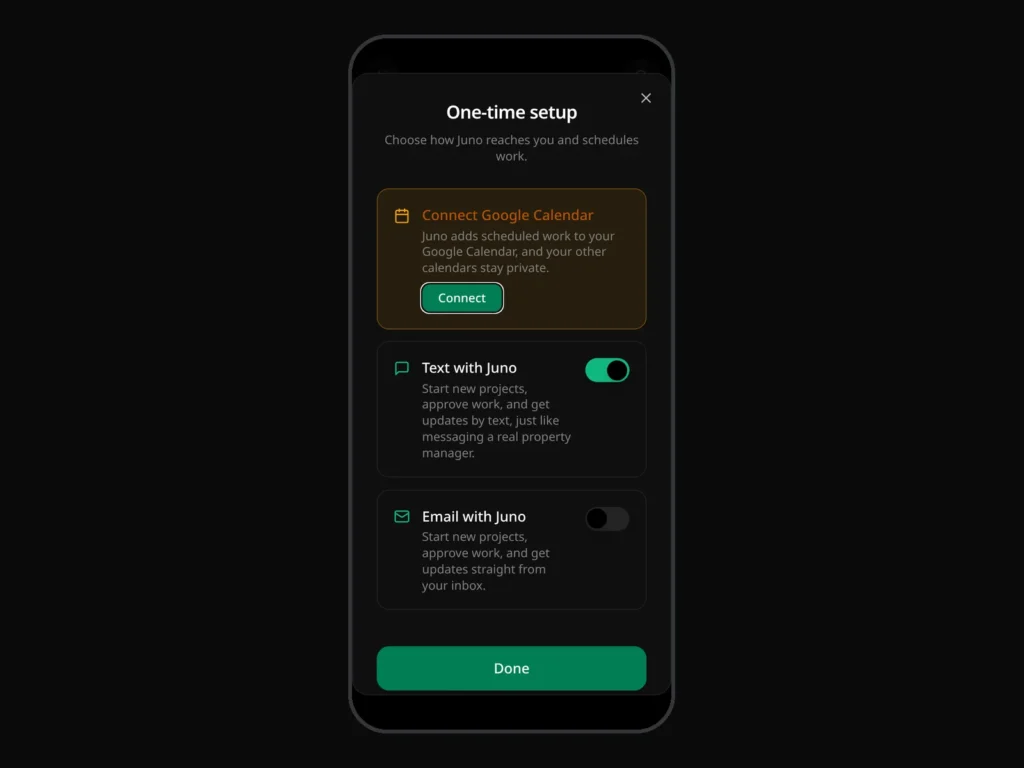
- After the first project, a focused one-time setup sheet appears.
- Google Calendar: one-tap authorization creates a private “Juno Calendar” that finds conflict-free windows without exposing personal calendars.
- Text with Juno (on by default): approve quotes, answer trade questions and get status alerts over SMS, like texting a human property manager.
- Email with Juno: a secondary channel for detailed estimates and receipts.
Decision compression
Synthesizing market complexity into a single actionable verdict.
The user need
Traditional platforms hand users 15 quotes with conflicting scopes, hourly rates and deposit terms, which induces decision paralysis.
The solution
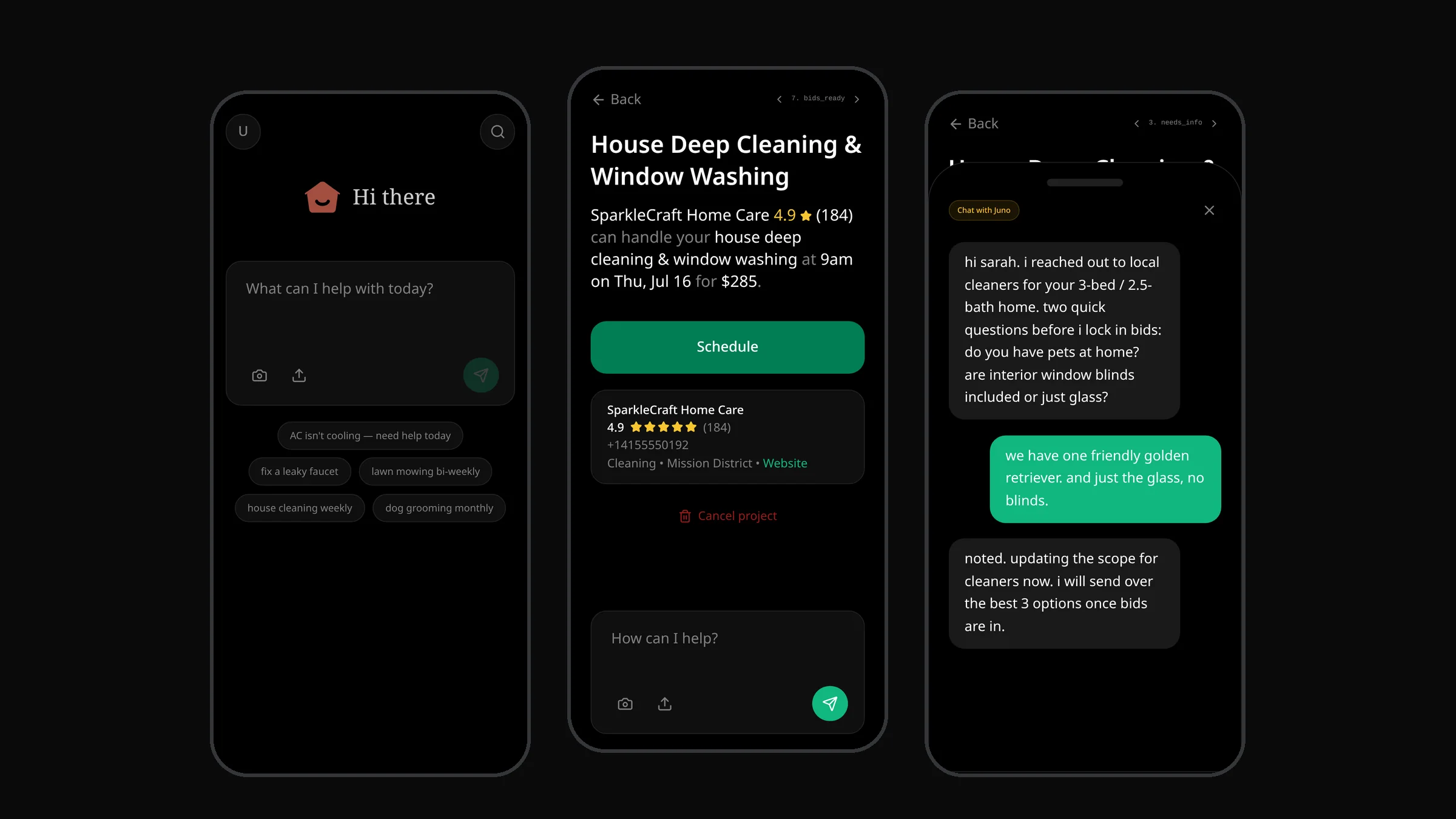
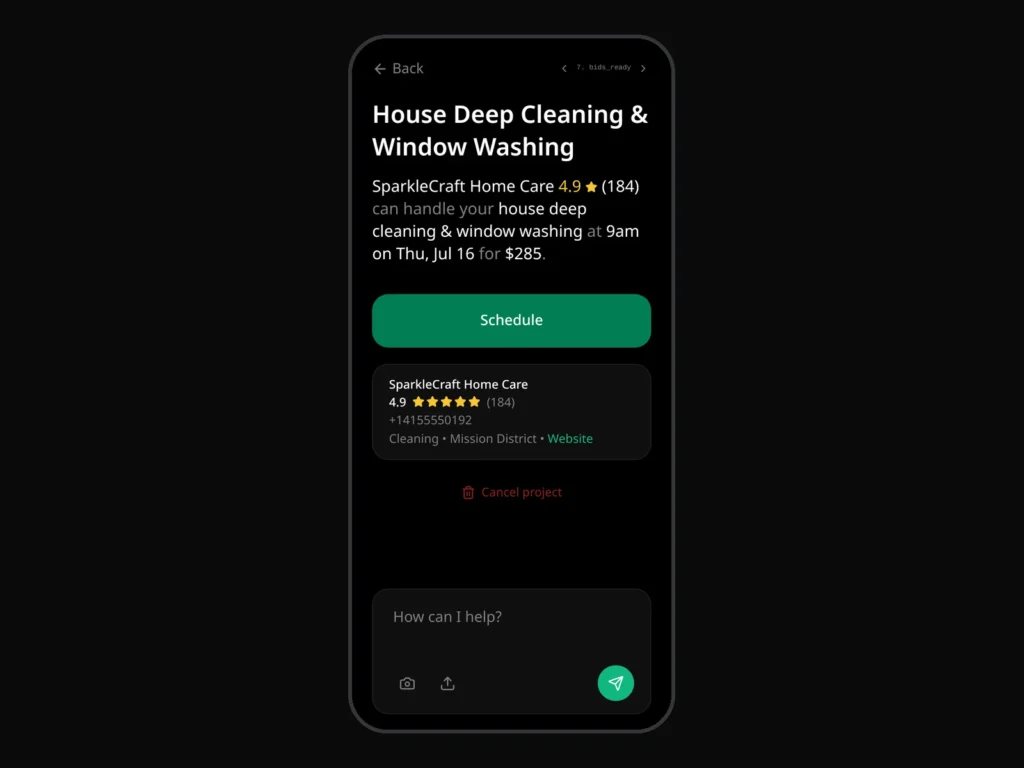
- Juno collects three competing bids in the background, then surfaces one recommendation in plain language: “SparkleCraft Home Care 4.9 ★ (184) can handle your house deep cleaning and window washing at 9am on Thu, Jul 16 for $285.”
- A single emerald Schedule button is the only forward action.
- A provider card shows verified reviews, category, phone and website for anyone who wants the details.
Total schedule certainty
Day-of-work clarity, with no surprise windows or costs.
The user need
Homeowners dread broad eight-hour arrival windows and surprise costs.
The solution
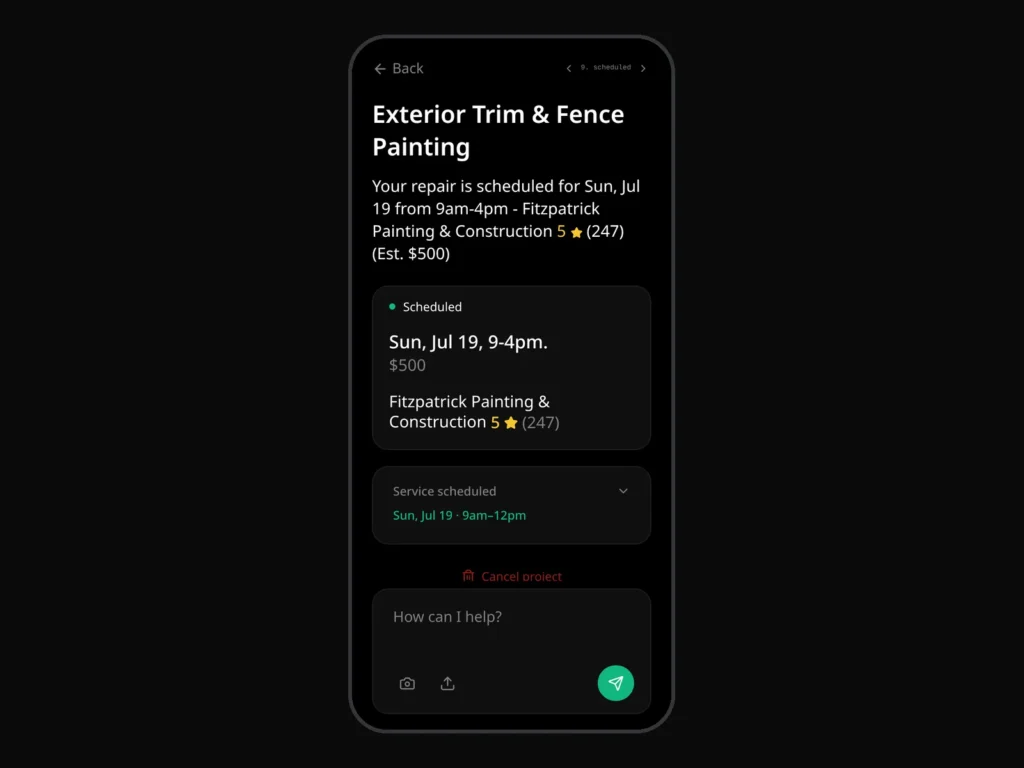
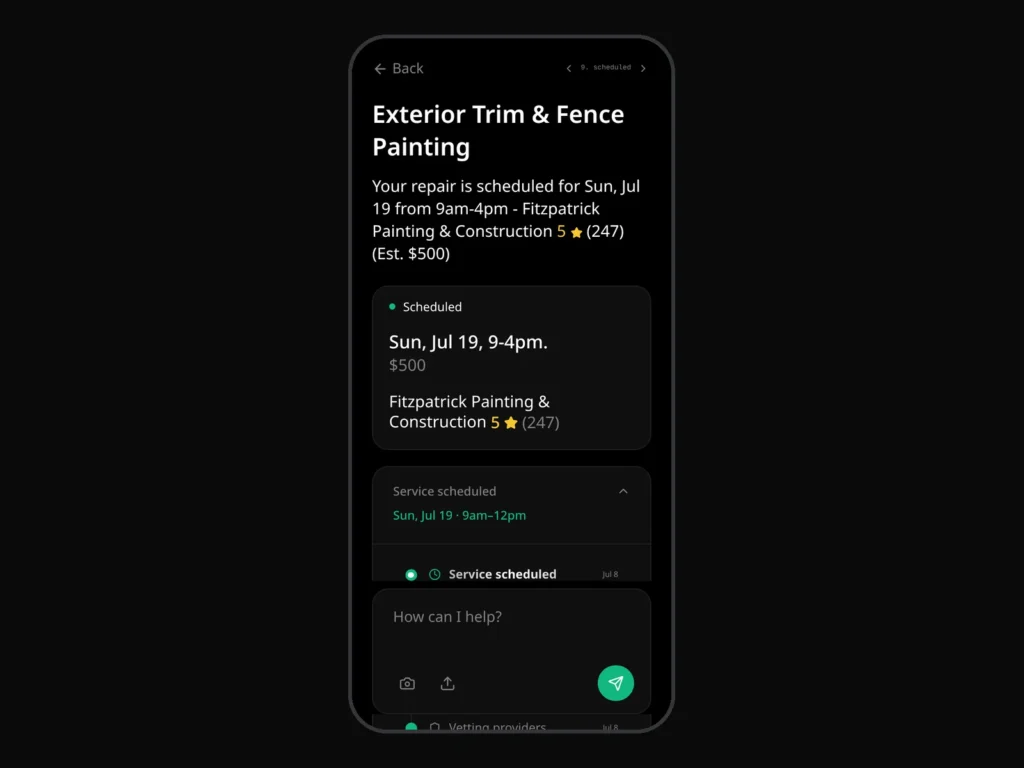
- An evergreen status headline: “Your repair is scheduled for Sun, Jul 19 from 9am-4pm. Fitzpatrick Painting & Construction 5 ★ (247) (Est. $500).”
- The confirmed start window is combined with the contractor’s estimated duration to show an exact start-to-finish bracket.
- The event syncs to the connected calendar with provider contact details and scope in the description.
Autonomous, never opaque
Chronological milestones that build trust.
The user need
When an AI works asynchronously, users get anxious if they can’t see forward momentum.
The solution
- An expandable activity timeline lists the newest milestones first.
- A progress header shows phase changes (“Finding providers”, “Reviewing bids”, “Service scheduled”) with a subtle shimmer.
- Emerald nodes verify each step: request submitted by text, outreach sent to 6 licensed exterior painters in 94110, formal quote received, $500 bid accepted, service scheduled.
In-flight scoping
An ultra-concise AI assistant with zero bureaucracy.
The user need
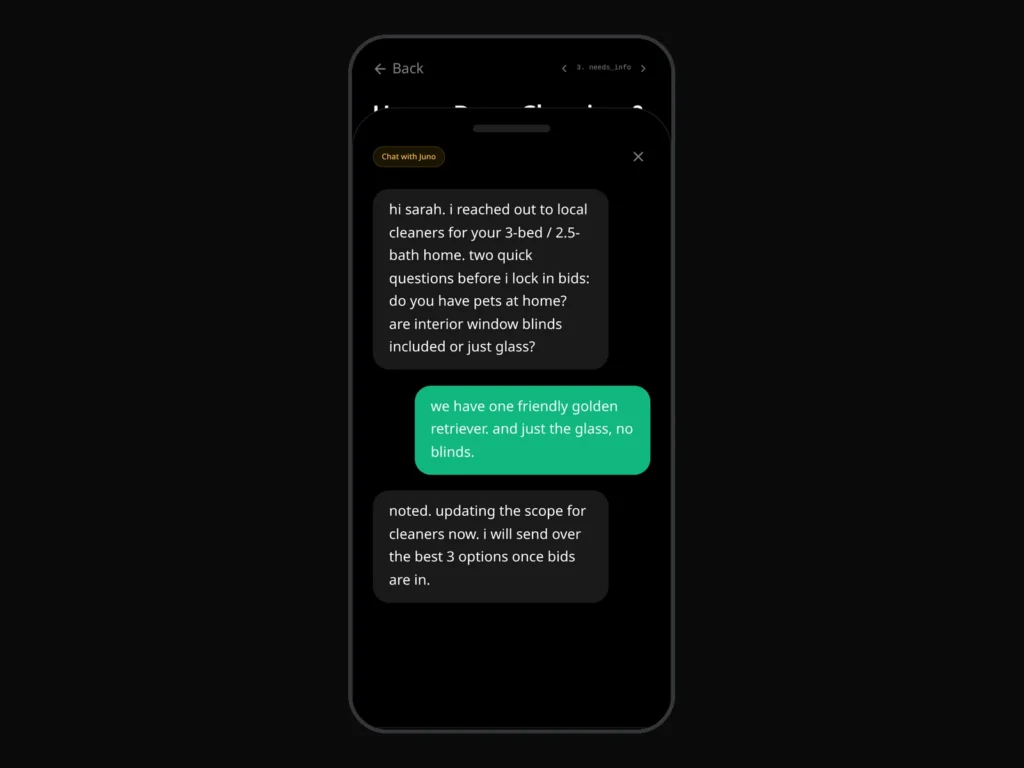
When contractors need clarification (“Are interior blinds included?”, “Do you have pets?”), sending users to a separate ticket inbox adds friction.
The solution
- A 90% snap-height drawer slides over the project, keeping the task in view.
- The AI voice is tuned to be brief and lowercase-friendly: no robotic greetings, corporate filler or synthetic exclamation marks.
- Replies in the drawer are translated into trade-appropriate SMS and sent straight to the contractor.
Account and preferences
Persistent credentials, location routing and channel control.
The user need
Managing addresses, notifications and payment details across properties should be effortless.
The solution
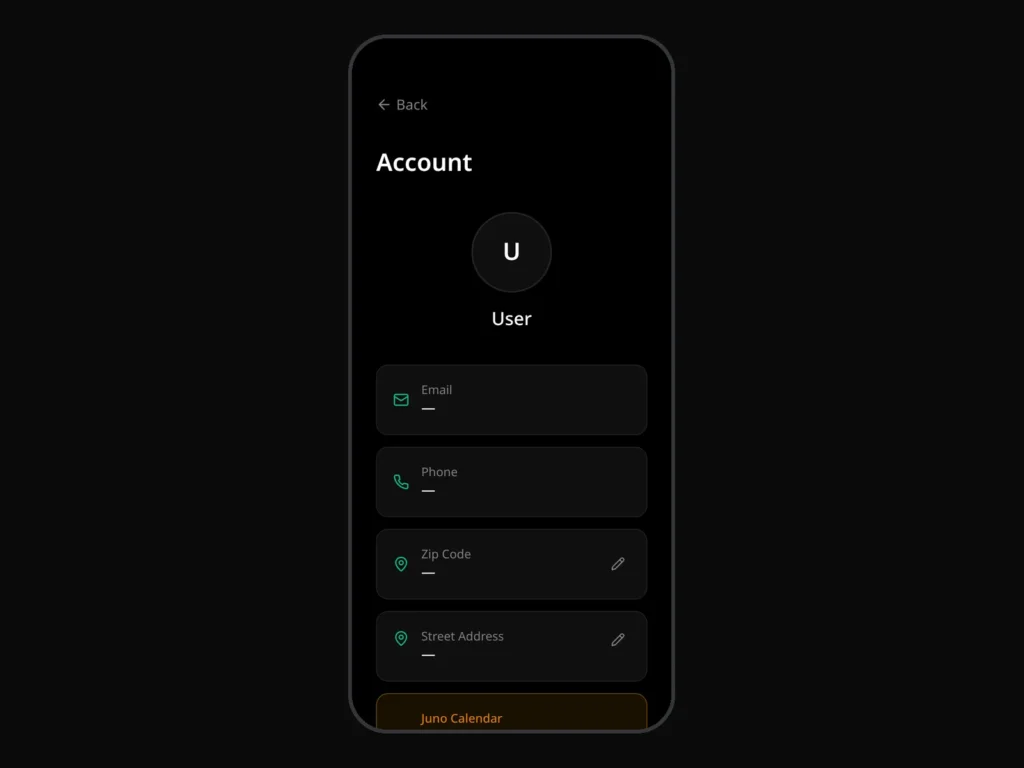
- Google SSO details, a verified mobile number and zip code link to the profile automatically.
- Users keep explicit control over SMS vs. email notifications.
- Stored addresses enable hyper-local routing without asking for location on every new job.
Operations and scale
Bridging autonomous software with real-world carrier logistics.
Compliance, trust and defensibility
Compliance as a product differentiator.
Juno is built to comply with CCPA, CalOPPA and Twilio and carrier 10DLC and toll-free verification standards. Explicit opt-in language protects deliverability and homeowner trust.
The business model flywheel
- Low acquisition cost: zero-friction intake converts organic and referral traffic better than catalog directories.
- High contractor engagement: scope-complete, verified inquiries get far higher response rates than unvetted cold leads.
- Pluggable acquisition thesis: an AI-first layer can sit on top of Yelp and Google Places, capturing transaction fees while removing most of the user’s friction.