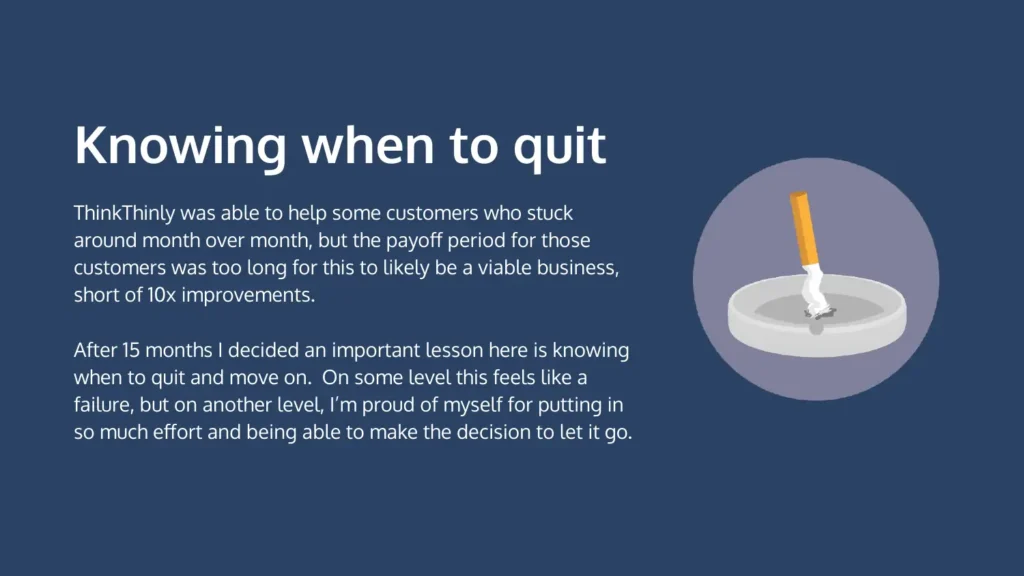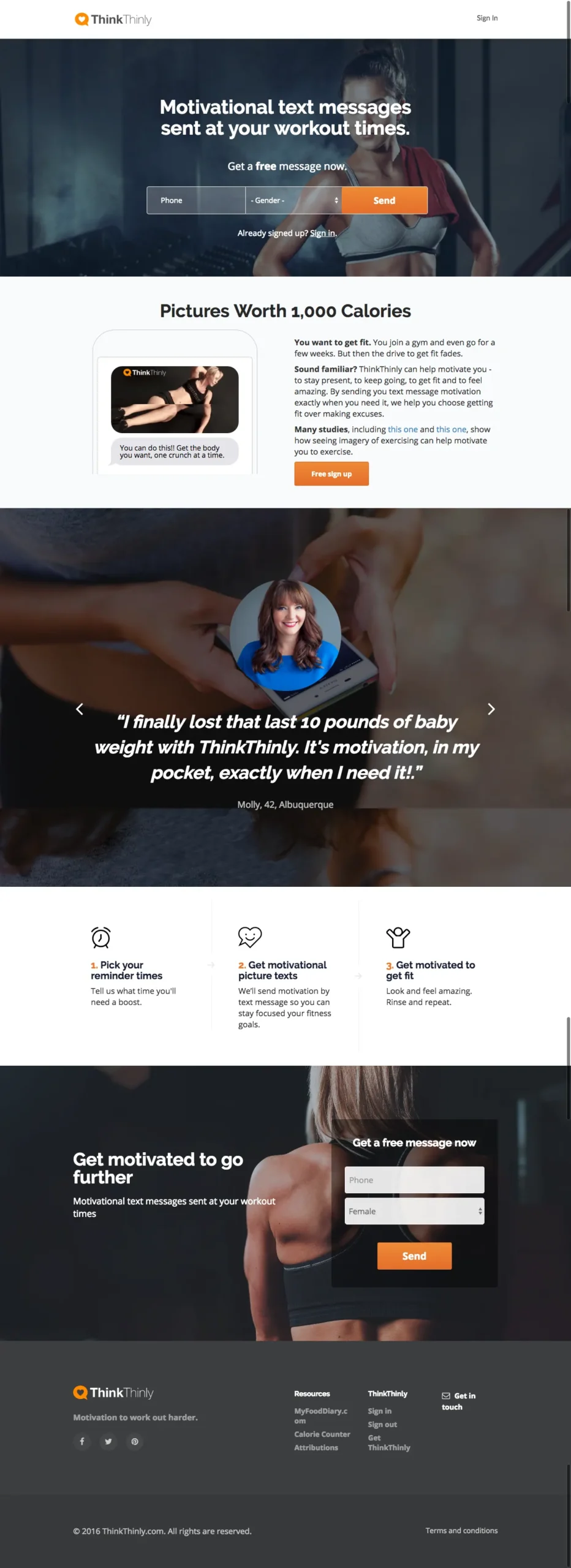
About ThinkThinly
ThinkThinly was designed to help motivate you to workout, with perfectly-timed text messages. Imagine heading out of work and deciding whether to go to the gym or go home...and exactly then you get a text message with the kind of push that gets you to the gym.
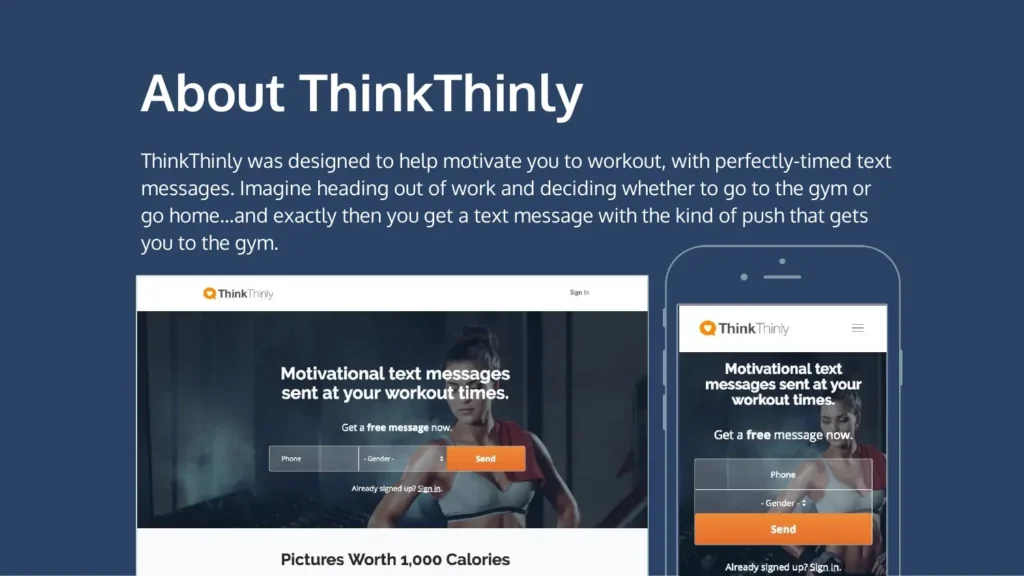
Business Case
In 2015 fitness was a $25.8 Billion per year industry. ThinkThinly aimed to align itself with the rise in fit-tech adoption, including wearables and mobile apps, but focusing on SMS as the medium.
U.S. fitness center / health club industry revenue billions $ 2000- 2015
Research
Images of exercising: Exploring the links between exercise imagery use, autonomous and controlled motivation to exercise, and exercise intention and behavior
Using Images to Increase Exercise Behavior: Prototypes Versus Possible Selves
Do the “Why” Exercise to Find Your Deepest Motivation
The Lazy Way To Stop Procrastinating, Backed By Research
Dozens of others
Lark, Coach Alba and Coach.me and CrossFit
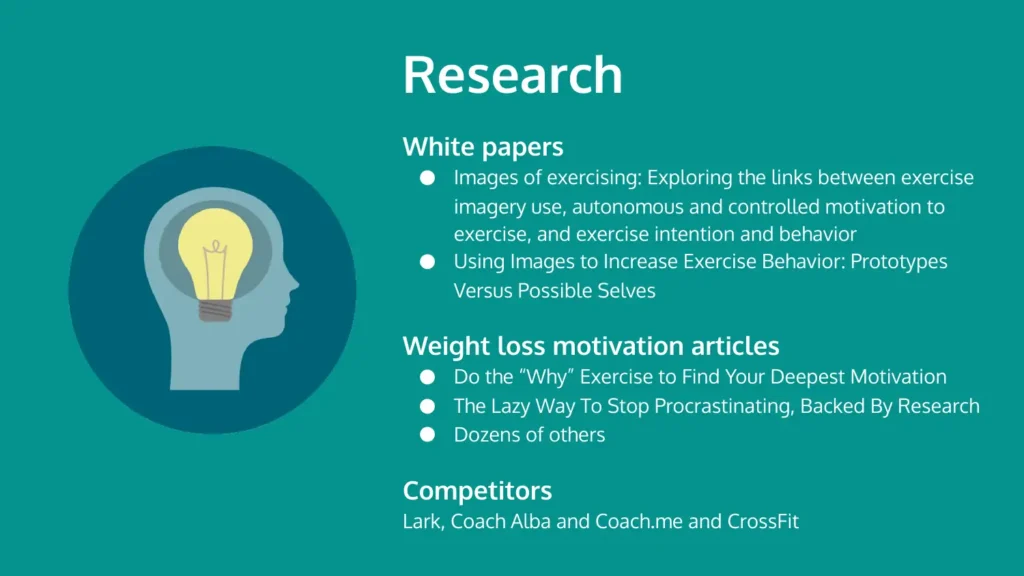
Survey
62 respondents to a 13 question survey to potential users to learn about imagery, tone, goals, demographics, message format, etc.
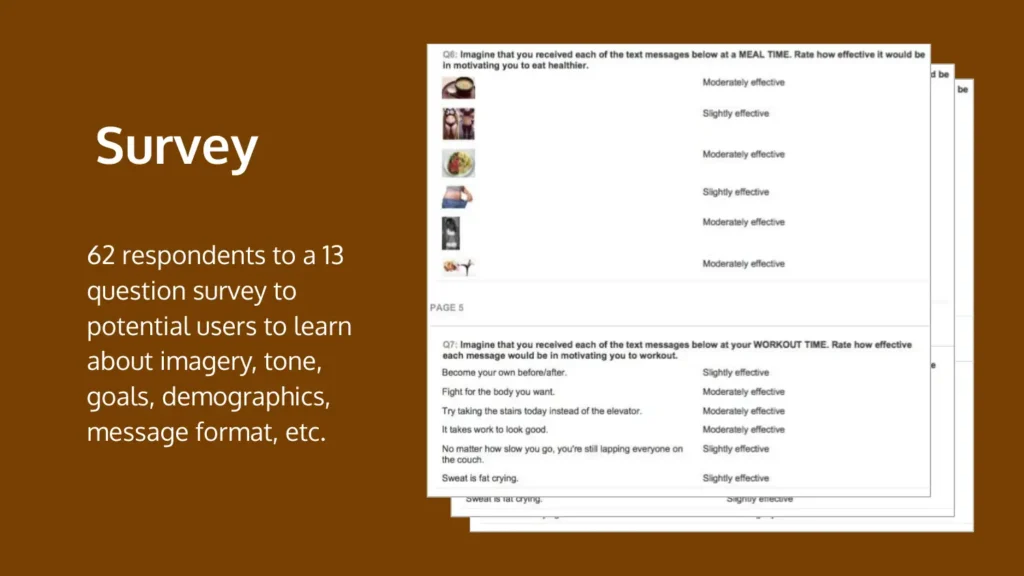
Signup question
Included a question in the signup flow to learn if diet or exercise were more of a perceived need.
Key Decisions
Focus on demographics and behaviors
Women
Fitness enthusiasts
Mobile-centric
35-45 years old
US (entire, not region)
Key Decisions
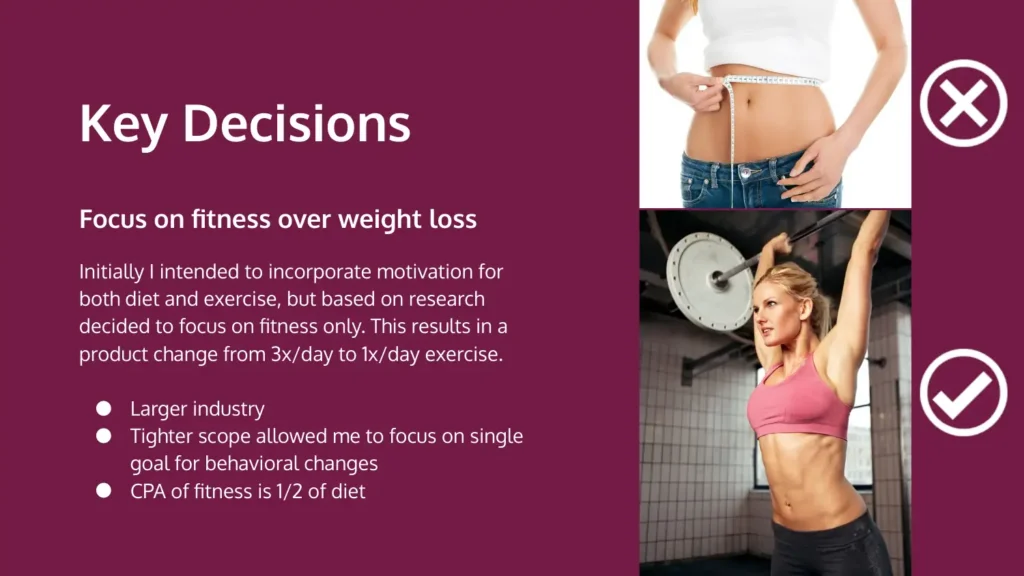
Focus on fitness over weight loss
Initially I intended to incorporate motivation for both diet and exercise, but based on research decided to focus on fitness only. This results in a product change from 3x/day to 1x/day exercise.
Larger industry
Tighter scope allowed me to focus on single goal for behavioral changes
CPA of fitness is 1/2 of diet
Key Decisions
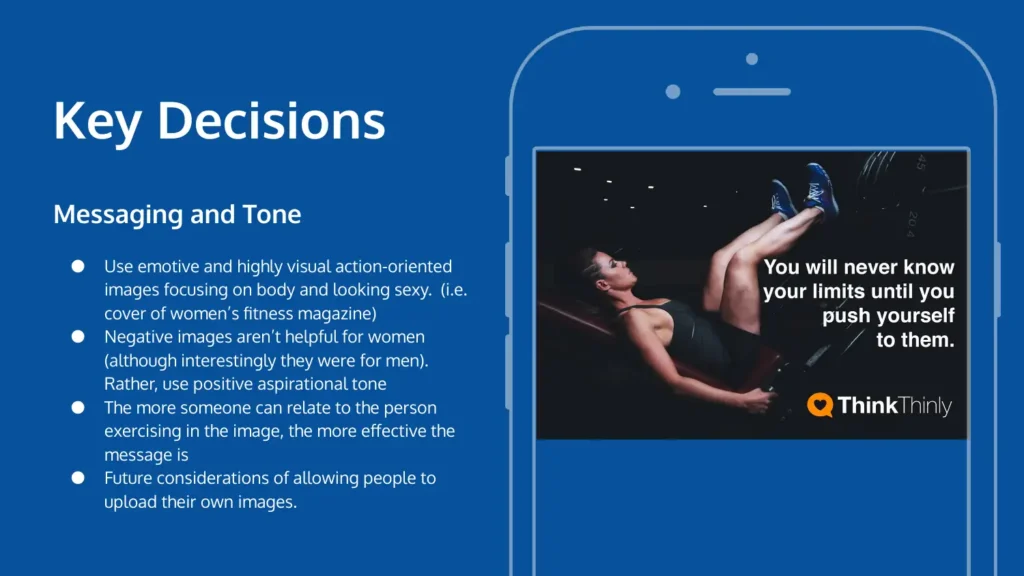
Use emotive and highly visual action-oriented images focusing on body and looking sexy. (i.e. cover of women’s fitness magazine)
Negative images aren’t helpful for women (although interestingly they were for men). Rather, use positive aspirational tone
The more someone can relate to the person exercising in the image, the more effective the message is
Future considerations of allowing people to upload their own images.
Design and build
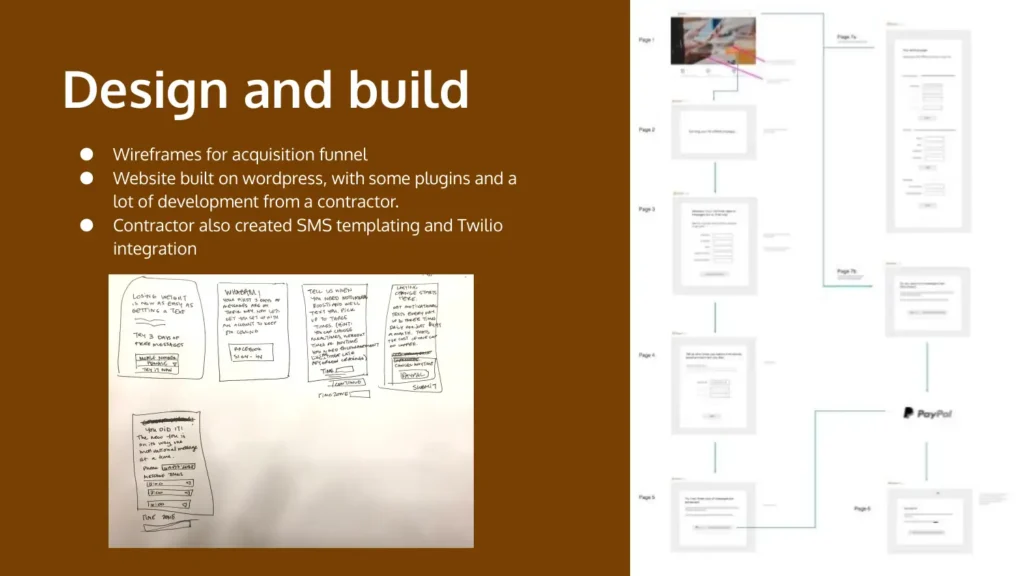
Wireframes for acquisition funnel
Website built on wordpress, with some plugins and a lot of development from a contractor.
Contractor also created SMS templating and Twilio integration
Optimize in steps
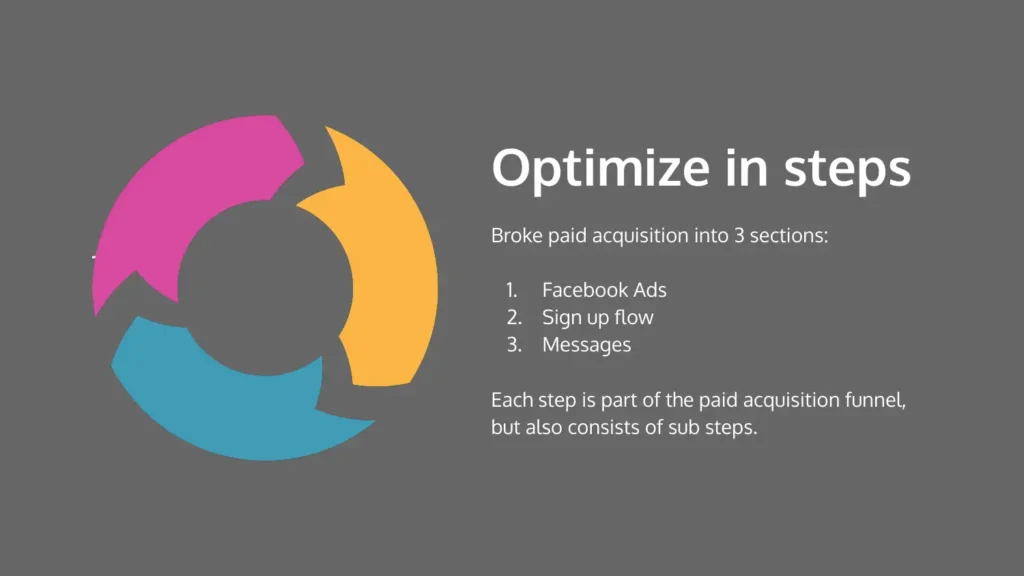
Broke paid acquisition into 3 sections:
Each step is part of the paid acquisition funnel, but also consists of sub steps.
Facebook ads
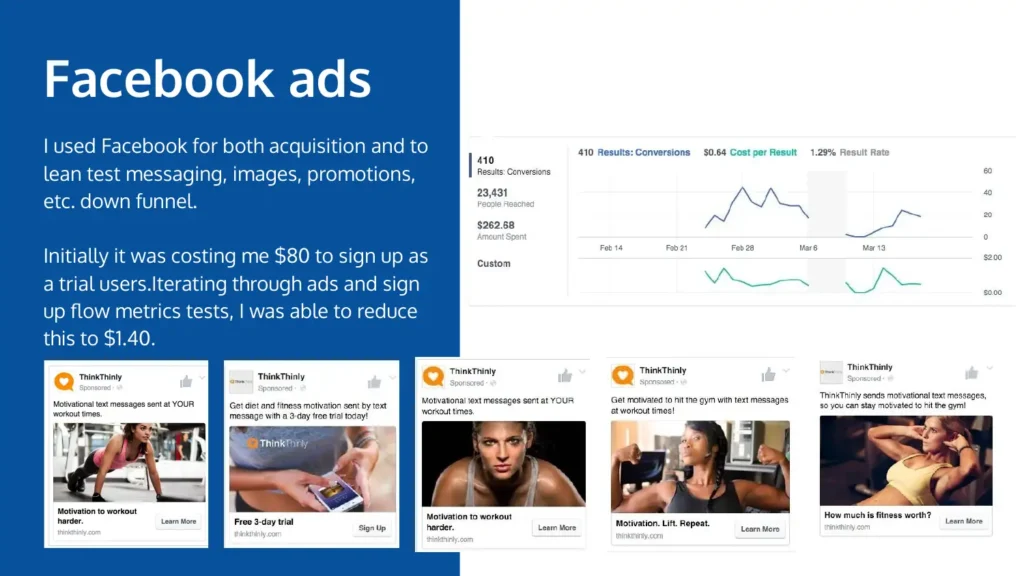
I used Facebook for both acquisition and to lean test messaging, images, promotions, etc. down funnel.
Initially it was costing me $80 to sign up as a trial users.Iterating through ads and sign up flow metrics tests, I was able to reduce this to $1.40.
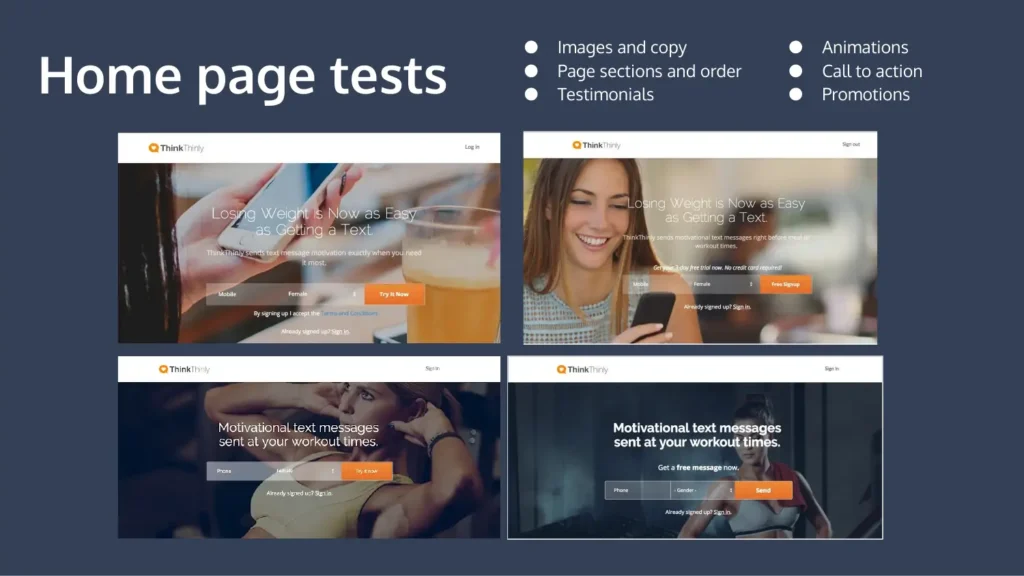
Home page tests
Images and copy
Page sections and order
Testimonials
Animations
Call to action
Promotions
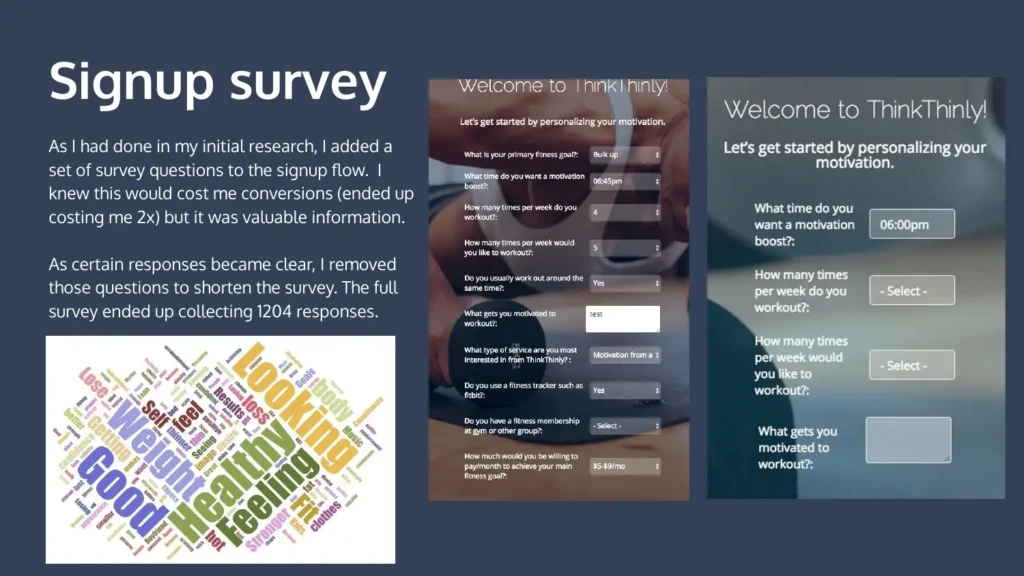
Signup survey
As I had done in my initial research, I added a set of survey questions to the signup flow. I knew this would cost me conversions (ended up costing me 2x) but it was valuable information.
As certain responses became clear, I removed those questions to shorten the survey. The full survey ended up collecting 1204 responses.
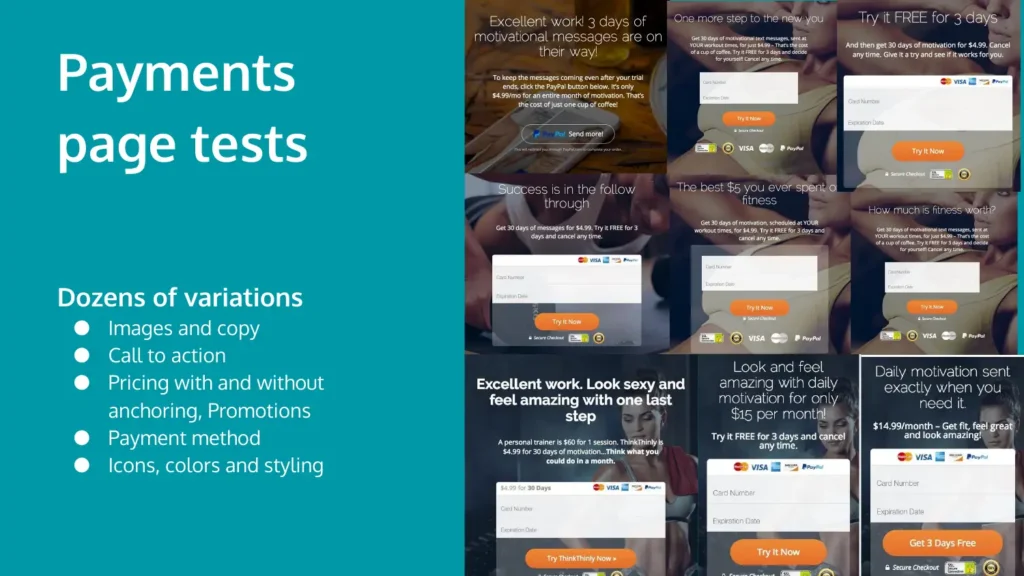
Payments page tests
Images and copy
Call to action
Pricing with and without anchoring, Promotions
Payment method
Icons, colors and styling
Signup funnel analysis
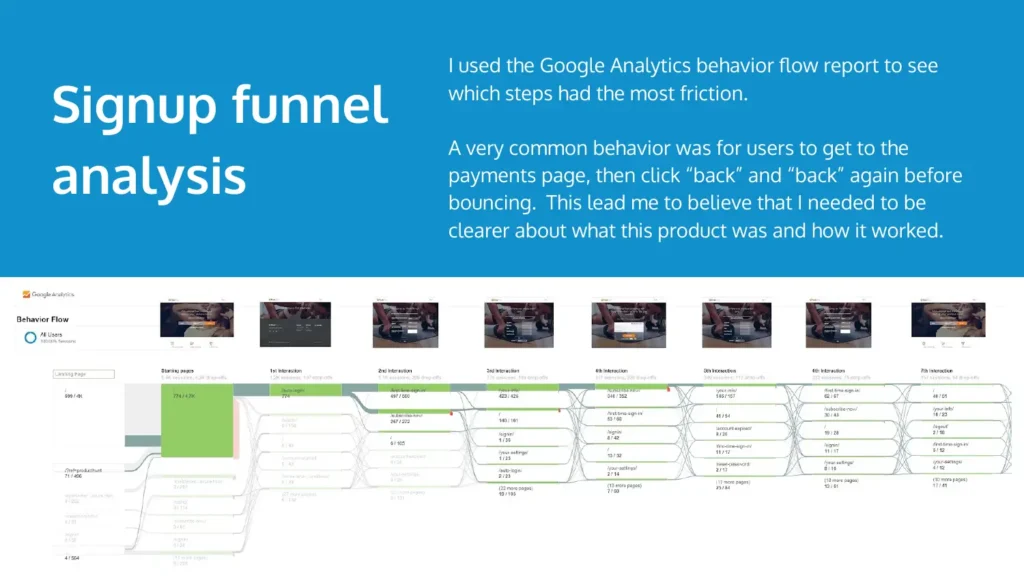
I used the Google Analytics behavior flow report to see which steps had the most friction.
A very common behavior was for users to get to the payments page, then click “back” and “back” again before bouncing. This lead me to believe that I needed to be clearer about what this product was and how it worked.
User outreach
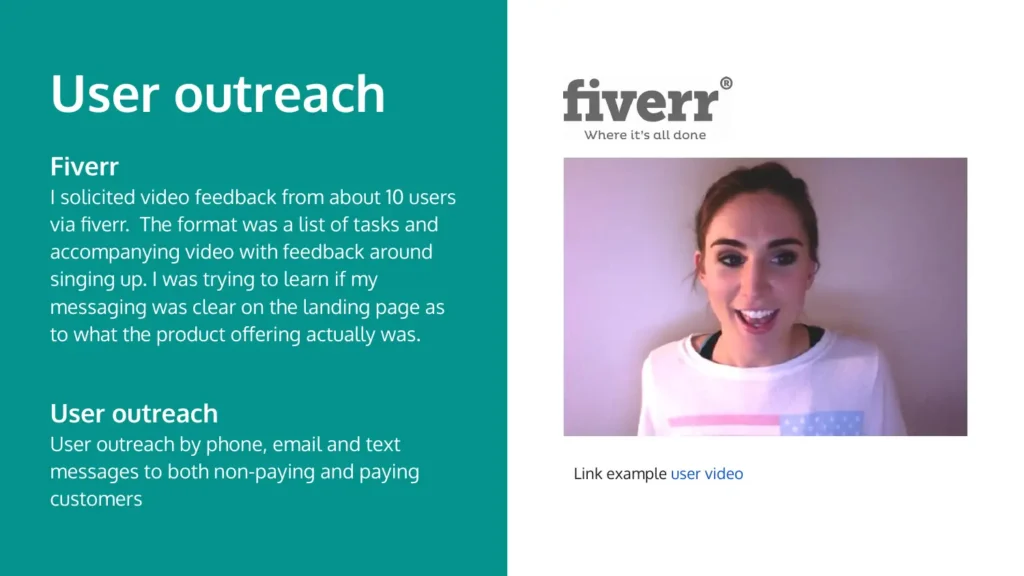
I solicited video feedback from about 10 users via fiverr. The format was a list of tasks and accompanying video with feedback around singing up. I was trying to learn if my messaging was clear on the landing page as to what the product offering actually was.
User outreach by phone, email and text messages to both non-paying and paying customers
Message tests
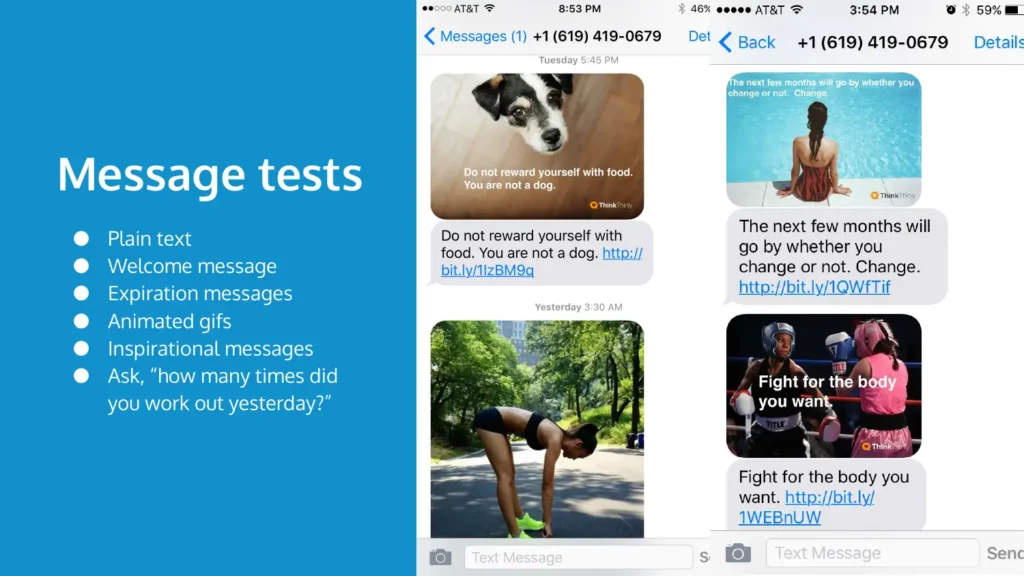
Plain text
Welcome message
Expiration messages
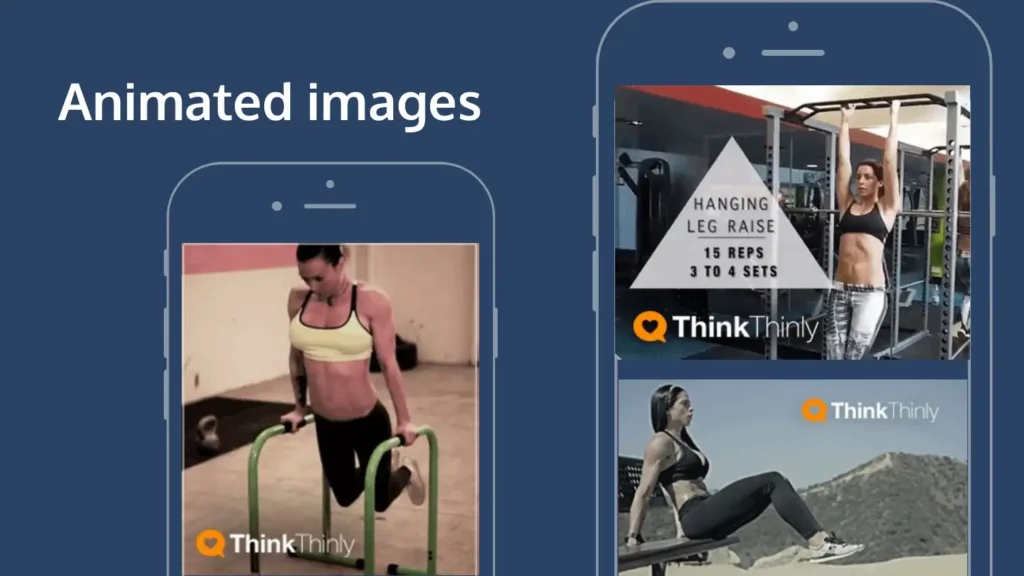
Animated gifs
Inspirational messages
Ask, “how many times did you work out yesterday?”
Message clicks
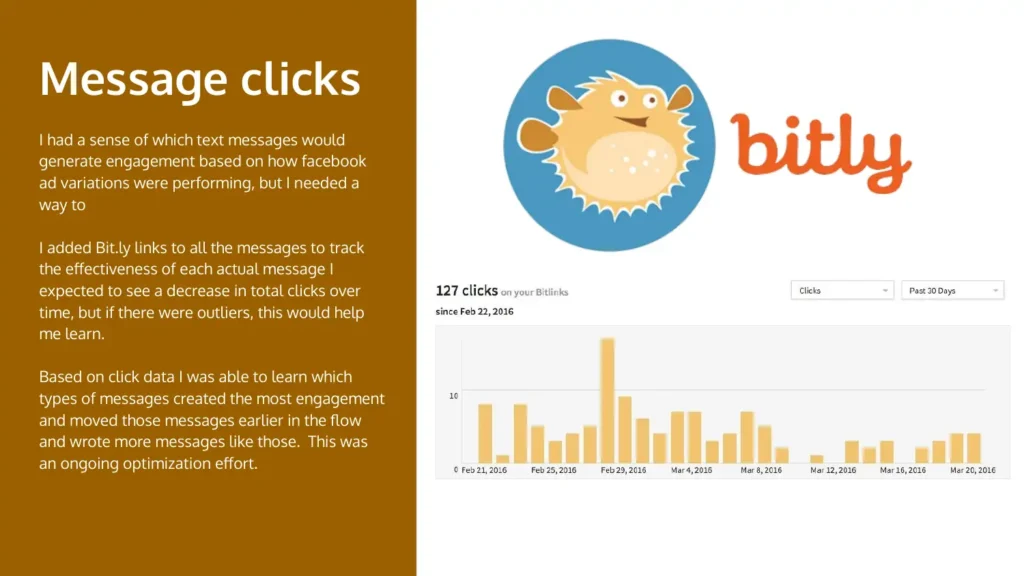
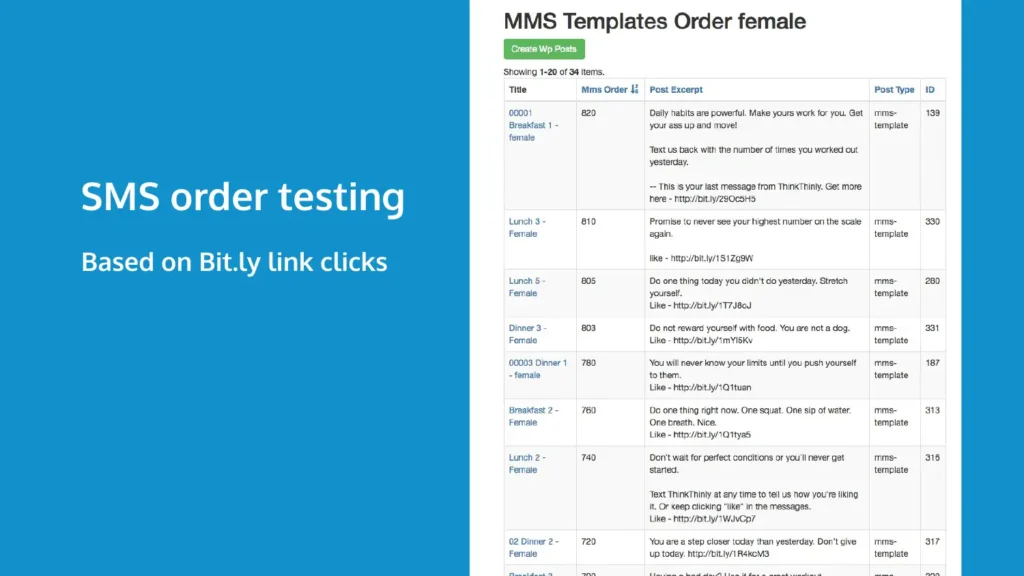
I had a sense of which text messages would generate engagement based on how facebook ad variations were performing, but I needed a way to
I added Bit.ly links to all the messages to track the effectiveness of each actual message I expected to see a decrease in total clicks over time, but if there were outliers, this would help me learn.
Based on click data I was able to learn which types of messages created the most engagement and moved those messages earlier in the flow and wrote more messages like those. This was an ongoing optimization effort.
SMS order testing
Based on Bit.ly link clicks
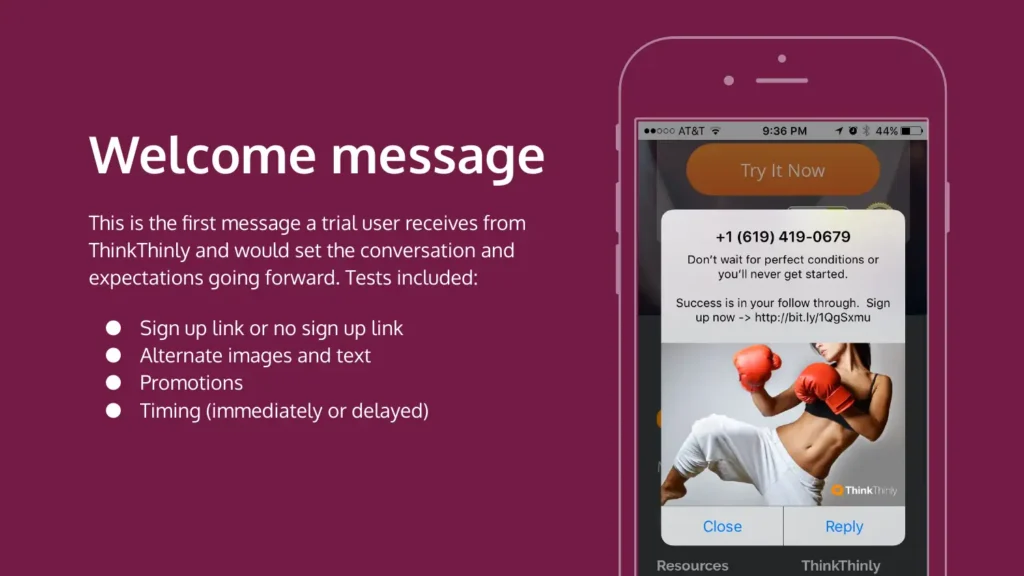
Welcome message
This is the first message a trial user receives from ThinkThinly and would set the conversation and expectations going forward. Tests included:
Sign up link or no sign up link
Alternate images and text
Promotions
Timing (immediately or delayed)
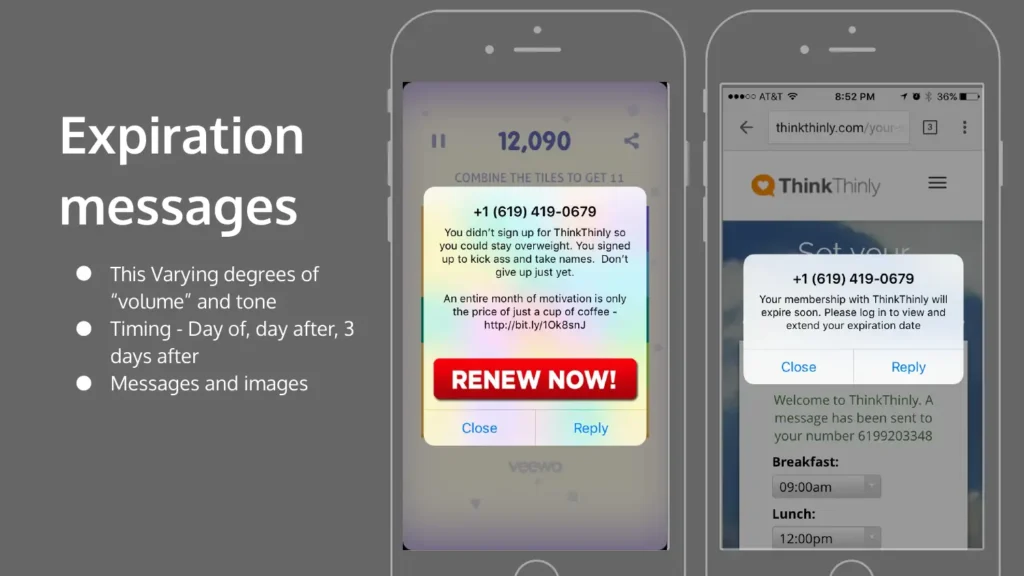
Expiration messages
This Varying degrees of “volume” and tone
Timing - Day of, day after, 3 days after
Messages and images
Animated images
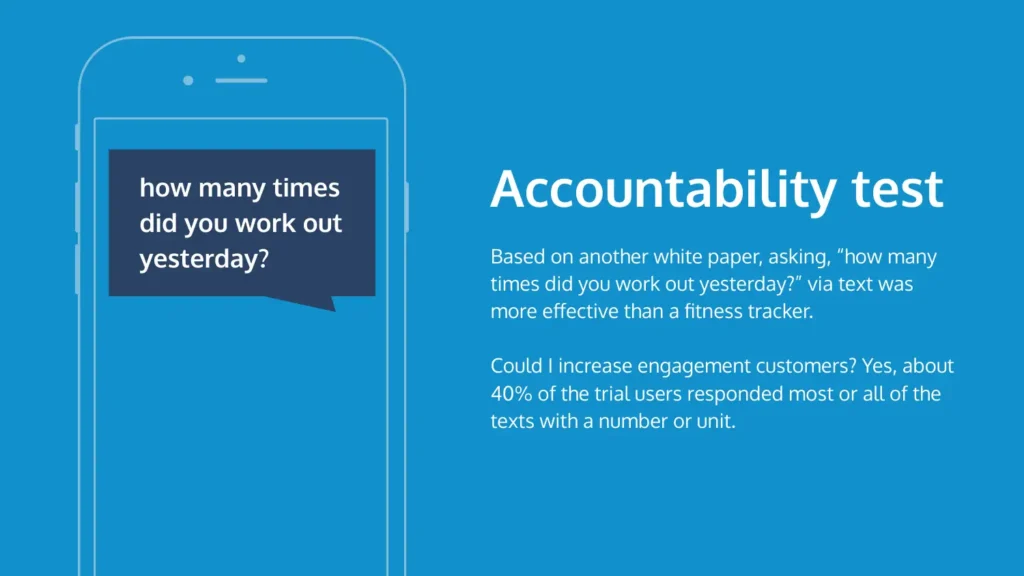
Accountability test
Based on another white paper, asking, “how many times did you work out yesterday?” via text was more effective than a fitness tracker.
Could I increase engagement customers? Yes, about 40% of the trial users responded most or all of the texts with a number or unit.
how many times did you work out yesterday?
What’s going on?
Users were clicking ads, visiting the site, inputting their phone numbers, gender, workout times, filling out a survey about what motivates them to workout more - all for $1.40. Many of them even said they’d be willing to pay $5 or more per month for a texting motivational service - but once they hit the payment page, most bailed.
What value wasn’t being communicating or demonstrated to them before that point? Was the price too high? Did I establish enough trust?
Big decisions
CPA free trial customer - $1.20
CPA paying customer - $150.00
Customer value? Est $25 LTV
Build big user base and raise money to figure out what to offer?
Offer in-message referrals to a gym?
Sell users to LA Fitness or similar?
Are users REALLY getting fit with this service?
If this service truly provides value, how to communicate this?
Is this worth continuing?
Knowing when to quit
ThinkThinly was able to help some customers who stuck around month over month, but the payoff period for those customers was too long for this to likely be a viable business, short of 10x improvements.
After 15 months I decided an important lesson here is knowing when to quit and move on. On some level this feels like a failure, but on another level, I’m proud of myself for putting in so much effort and being able to make the decision to let it go.